Cuvée presentation
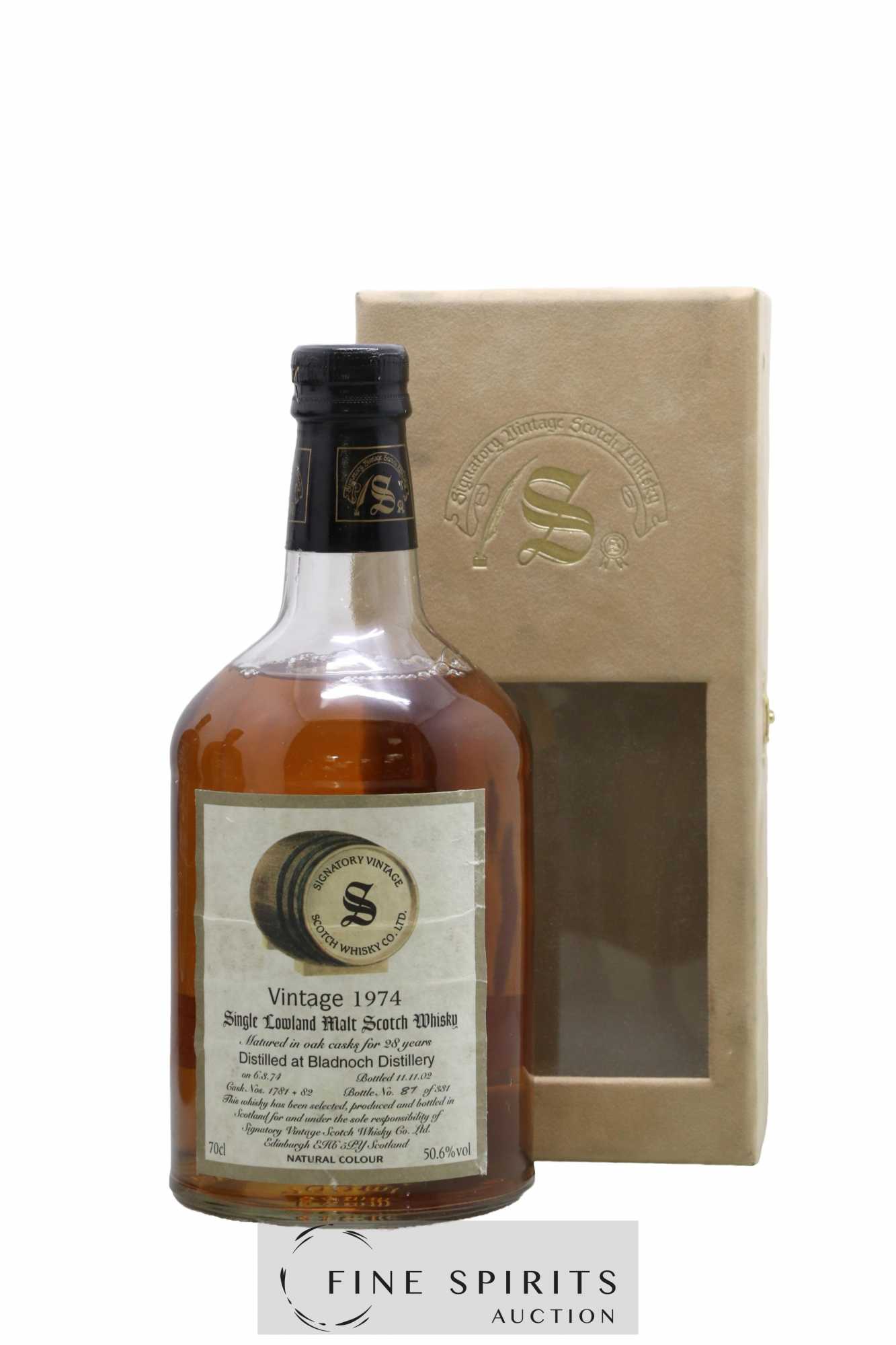
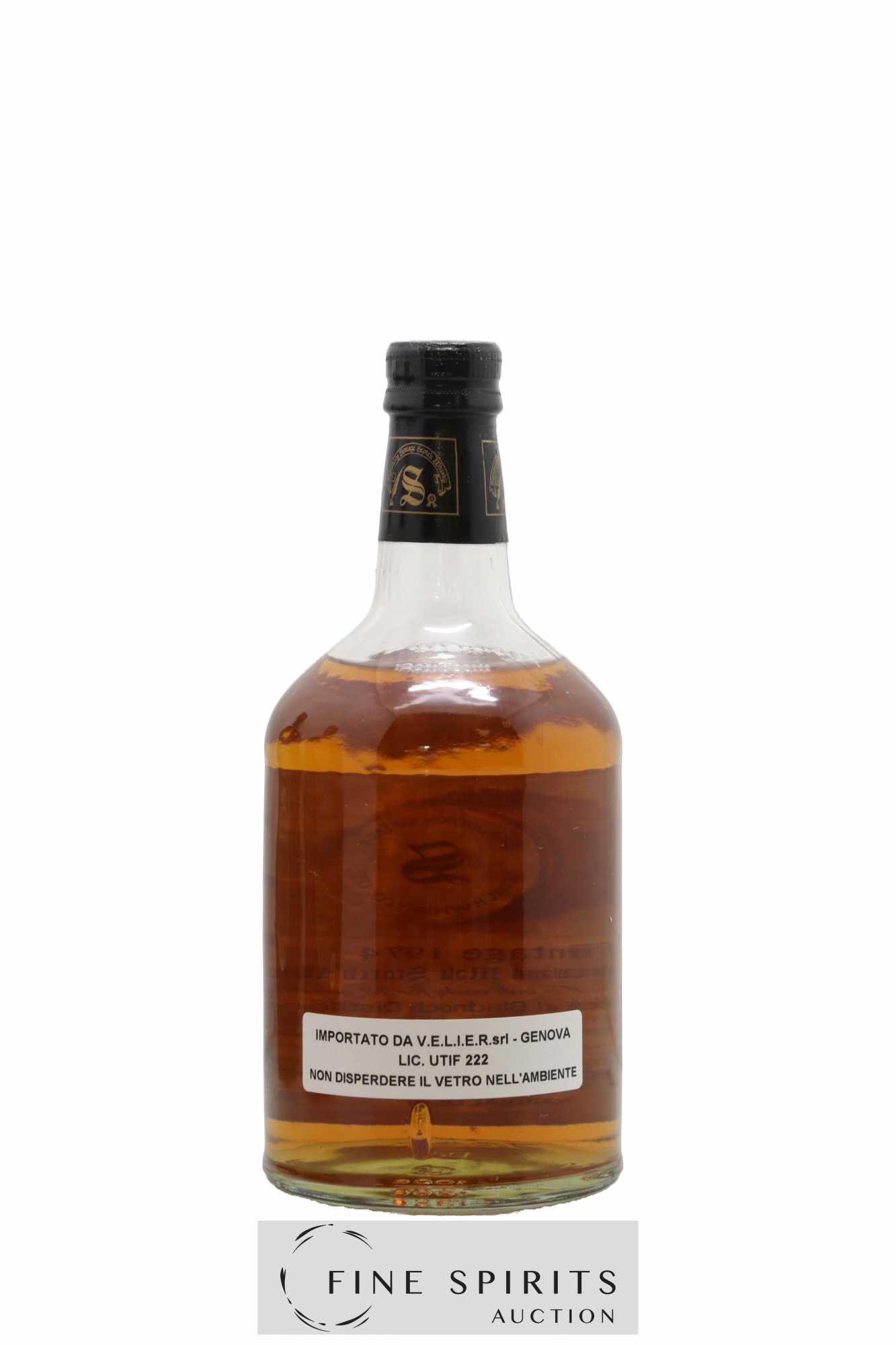
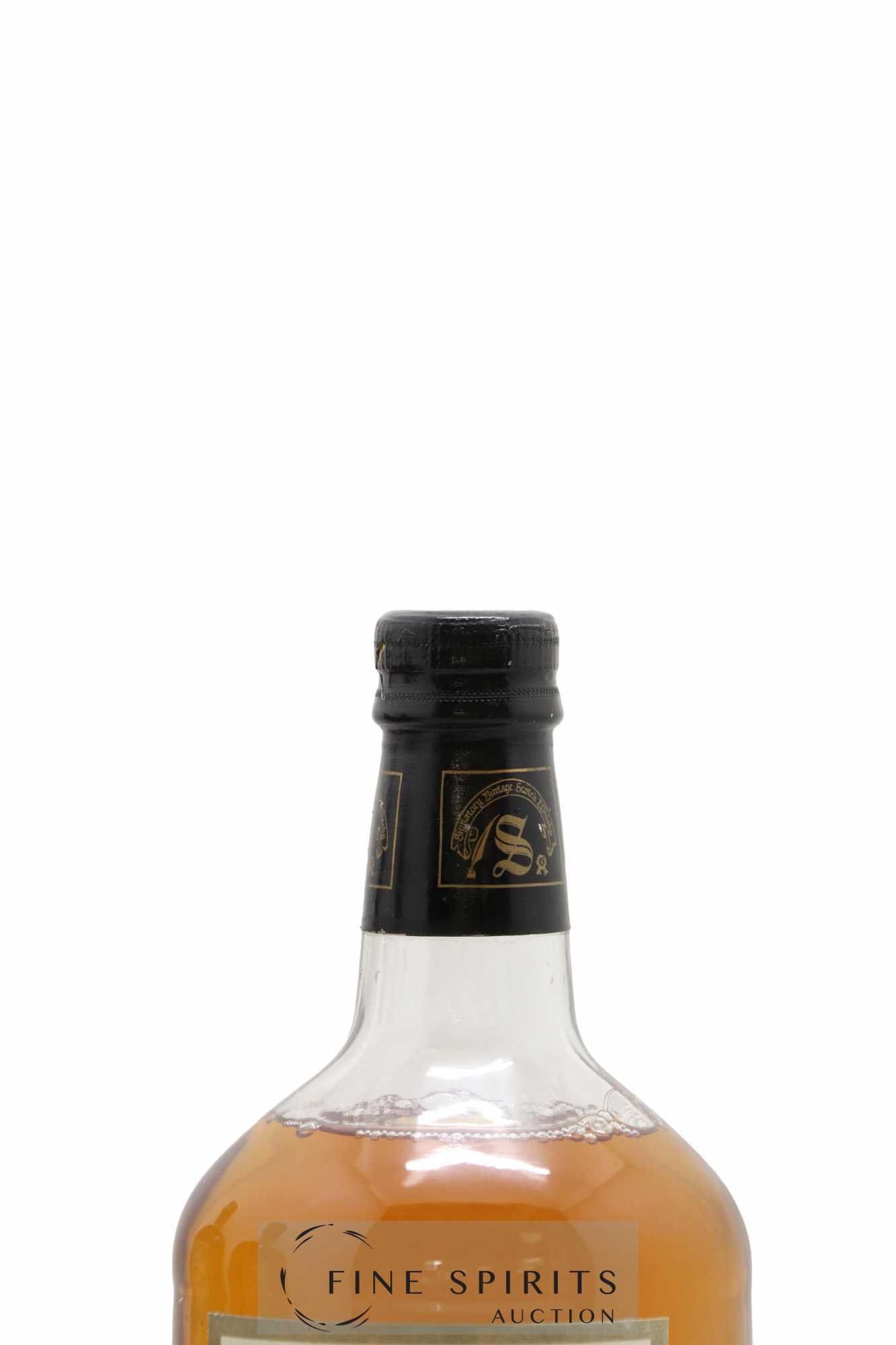
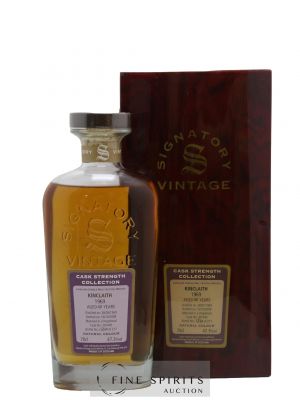
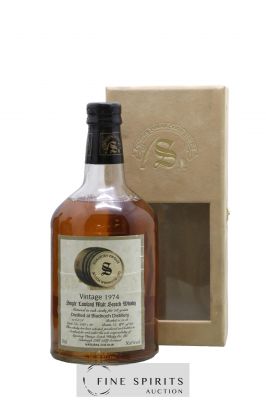
A small batch (#1781 and #1782) of Bladnoch, distilled in 1974 and bottled in 2002. Signatory Vintage's founder Andrew Symington first joined the whisky industry when he began selecting casks for Prestonfield House Hotel in Edinburgh. In 1988, the adventure continued when he founded Signatory Vintage, investing in a small bottling chain set up in his warehouses in Edinburgh. He began releasing editions bottled at cask strength without chillfiltration or colouring, practices that were still rare in the late 1980s. The legendary series of “Dumpy bottles” notably included information previously seldom seen on labels, such as the cask number, cask type and number of bottles. The bottle number was also written by hand. Signatory Vintage developed a strong reputation by selling not only iconic whiskies from well-known distilleries (Springbank, Ardbeg, Laphroaig and Bowmore) but also bottlings from very rare distilleries such as Ben Wyvis, Glen Flagler and Killyloch, and of course the many versions distilled in the Lomond stills of Miltonduff (Mosstowie), Glen Keith (Craigduff, Glenisla) and Glenburgie (Glencraig). Finally, in 2002, Andrew Symington bought the Edradour distillery in Pitlochry, in the Highlands of Scotland. Signatory Vintage was moved to the site, along with its warehouses, which face the distillery. A limited edition of 331 bottles.
The distillery Bladnoch
Scotland, Lowlands. Distillery operational. Owner: David Prior
Located in the extreme south-west Lowlands, not far from the English border, Bladnoch has always had its gaze set on Belfast (Ireland), which stands not far away. This attraction is also part of its past, with its founders, the McClellands, teaming up with the Belfast company Wm Dunville & Co in 1911. Closed from 1938 until 1956, it was then traded between Inver House Distillers Ltd, Arthur Bell & Sons and, finally, United Distillers, companies for which it produced a whisky primarily used for the groups' blends. Up until the mid-1990s, its own bottlings were rare. United Distillers, however, incorporated it into its two flagship ranges of the time, The Rare Malts Selection and Flora & Fauna, but later decided to close the site in 1993. In 1994, Raymond Armstrong, of Northern Ireland, offered to buy the distillery to create a cultural centre. Despite a clause limiting production to 100,000 litres of spirit per year signed upon purchase, in 2000 he decided to re-launch production and soon released many new bottlings of Bladnoch.
Report a problem with this lot ? Report