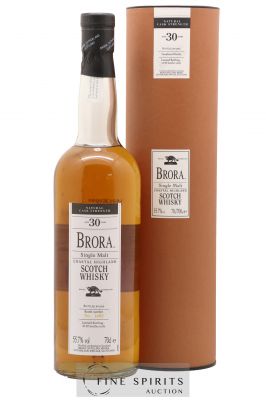
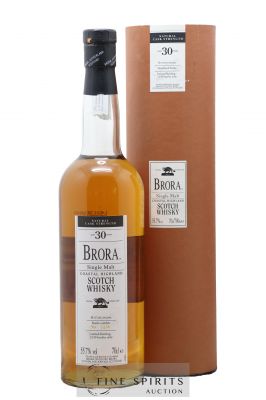
Cuvée presentation
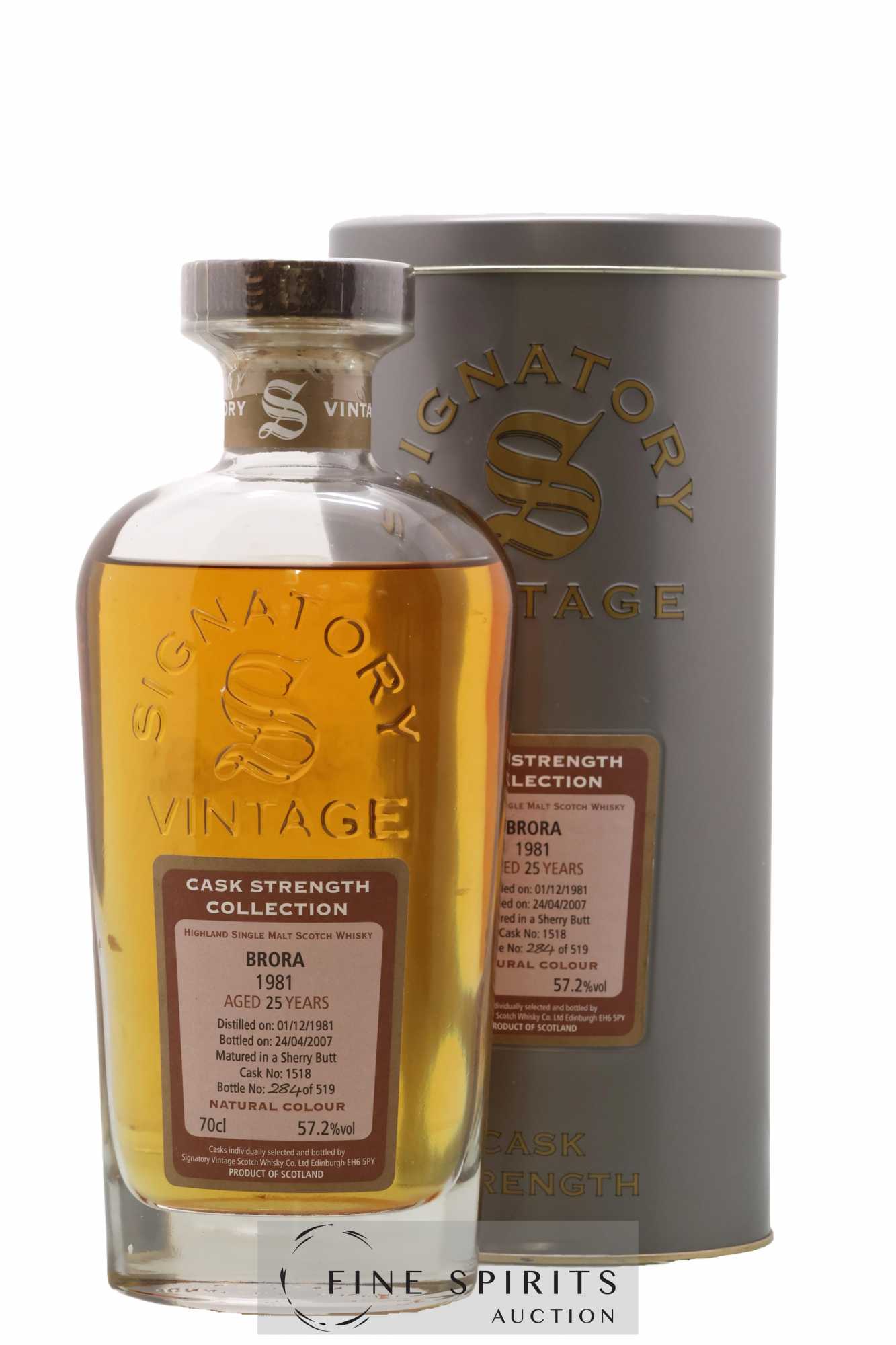
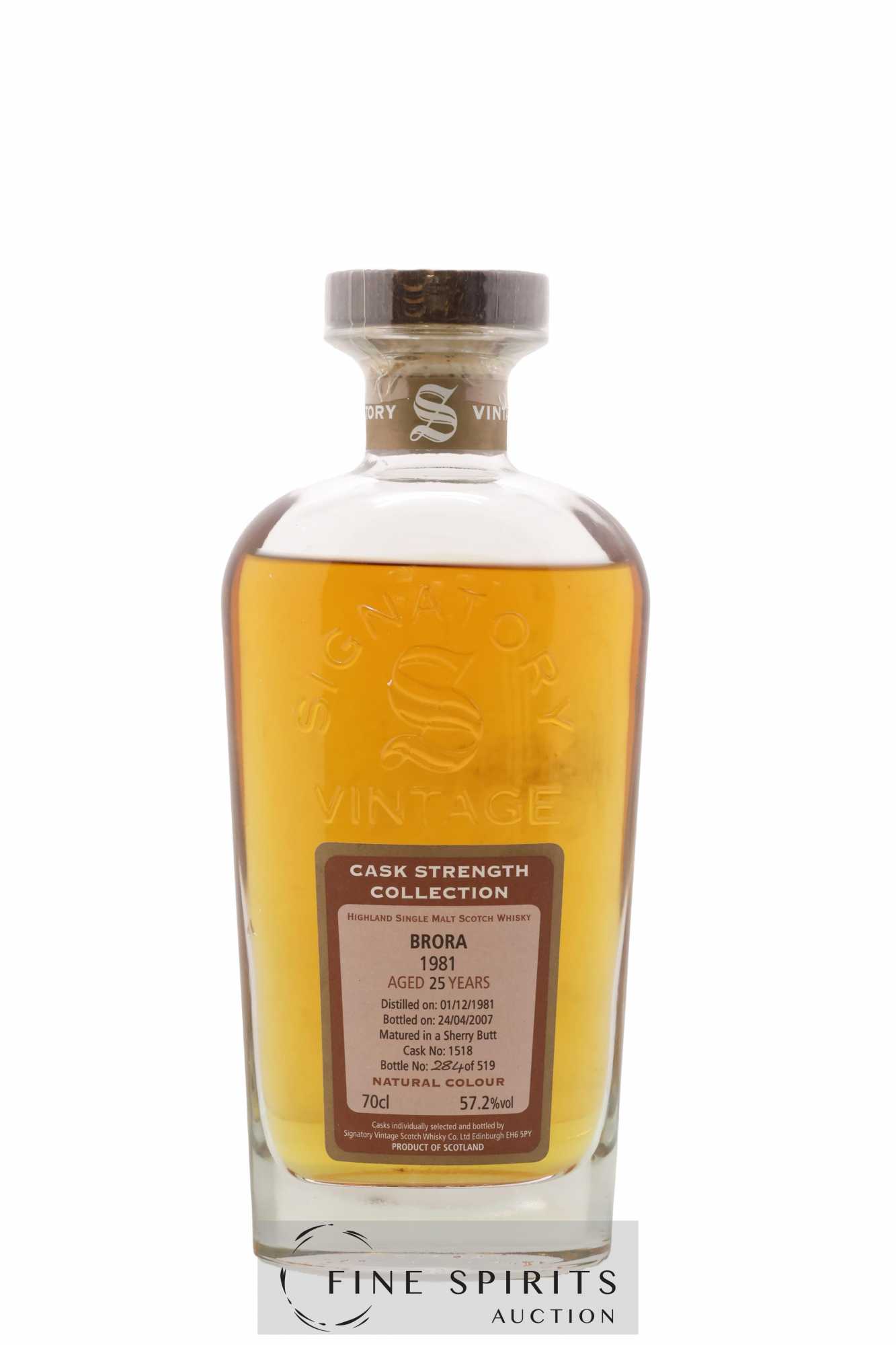
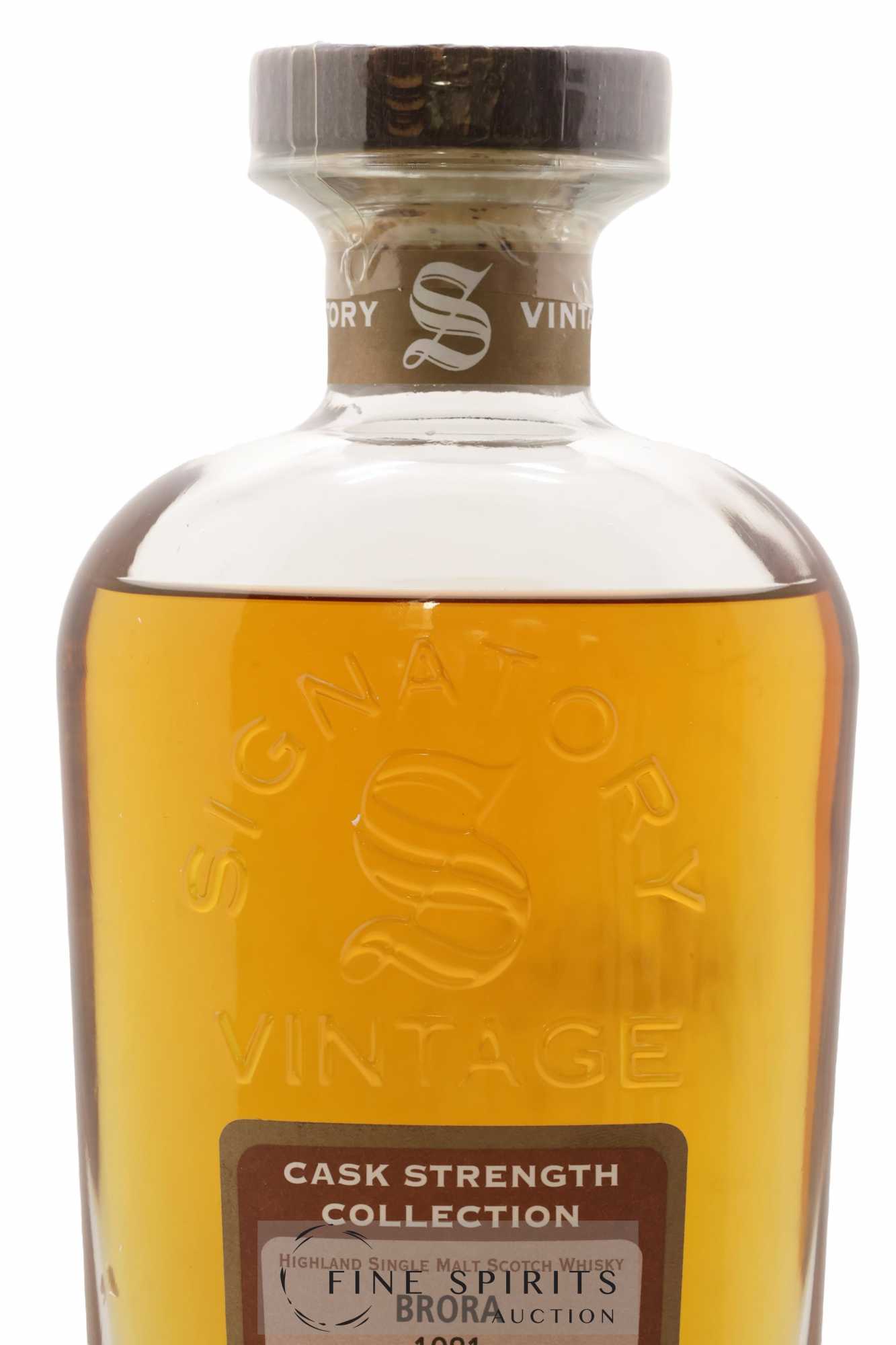
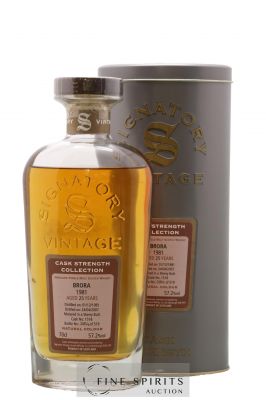
A Brora single cask (#1518) distilled in 1981, aged in a sherry cask and bottled in 2007. Signatory Vintage's founder Andrew Symington first joined the whisky industry when he began selecting casks for Prestonfield House Hotel in Edinburgh. In 1988, the adventure continued when he founded Signatory Vintage, investing in a small bottling chain set up in his warehouses in Edinburgh. He began releasing editions bottled at cask strength without chillfiltration or colouring, practices that were still rare in the late 1980s. The legendary series of “Dumpy bottles” notably included information previously seldom seen on labels, such as the cask number, cask type and number of bottles. The bottle number was also written by hand. Signatory Vintage developed a strong reputation by selling not only iconic whiskies from well-known distilleries (Springbank, Ardbeg, Laphroaig and Bowmore) but also bottlings from very rare distilleries such as Ben Wyvis, Glen Flagler and Killyloch, and of course the many versions distilled in the Lomond stills of Miltonduff (Mosstowie), Glen Keith (Craigduff, Glenisla) and Glenburgie (Glencraig). Finally, in 2002, Andrew Symington bought the Edradour distillery in Pitlochry, in the Highlands of Scotland. Signatory Vintage was moved to the site, along with its warehouses, which face the distillery. A limited edition of 519 bottles.
The distillery Brora
Scotland, Northern Highlands. Distillery closed. Owner: Diageo
In the midst of the 1980s economic crisis, further accentuated by several decades of overproduction, Brora, like many Scottish distilleries, was forced to close on 17 March 1983. Founded in 1819 by the Marquess of Stafford in the village of Brora (Sutherland), it was originally named Clynelish. Swept up in the euphoria of the period following the end of WWII, the owners decided to increase its production capacity in 1967, building a new cutting edge production unit on the same site, dubbed Clynelish #2. To prevent confusion between the two distilleries, the historic site was renamed Brora in 1969 and its malt adopted a very peaty profile up until the late 1970s. For purists and “taste historians”, the 50s and 60s versions of Clynelish #1 (Clynelish 12 Year old Ainslie & Heilbron Distillers, Spring Cap, Clynelish 24 Year Old Cadenhead, Clynelish 28 Year old 1965 Signatory Vintage) have become so impossible to find that most would never even hope to experience them. The peated versions from the 1970s and more specifically those from 1972 (Brora 22 Year Old Rare Malts Selection 60.02% and Brora Old Map Label Connoisseurs Choice Gordon & MacPhail) are still available and an absolute must-have for any self-respecting enthusiast or collector.
Report a problem with this lot ? Report